

Implementing Subjects : Flexitab srl, Victory srl, DACA-I srl.
GearUp: technical consultancy and specialist support activities
The GearUp Team participated in the development of the PON – NEOS “Off Shore Electric Vessel” project for the creation of a parallel hybrid propulsion composed of two Parker PMSM electric motors, each of 155 kW (@6700 rpm) and a Diesel engine of 184 kW (@4100 rpm), for a fast electric boat (55 knots), replacing conventional diesel propulsion.
The specific contribution of GearUp s.r.l. involved the conception, design and support for the realization of the composite gearbox consisting of three input shafts connected to the motors and one output shaft connected to the propeller. The gear toothing was created by adopting the All-addendum type High Sliding Gear (HSG) theory. The reducer is made up of two speed steps with a transmission ratio of 6.7:1 for the shafts connected to the two electric motors/generators (MG1 and MG2 in figure 1) and a third speed step with a 3.94:1 ratio connected to the thermal engine Diesel (ICE).
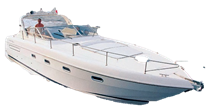
Figure 1 shows a scheme of the Naval hybrid propulsion created with a total useful power to the propeller equal to approximately 500 kW (@1000 rpm) for a pleasure boat of approximately 10 meters and with a maximum speed of 55 knots.
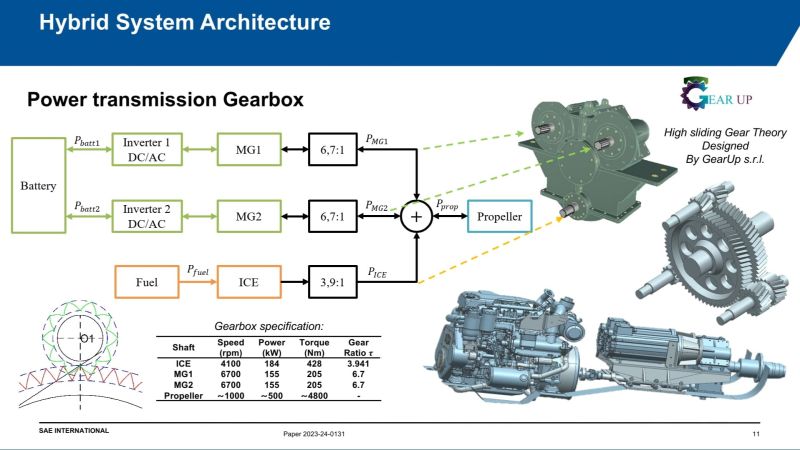
Figure 1. Construction diagram of the parallel hybrid thruster for naval application and of the gearbox created for coupling the three motors to the propeller.
Figure 2 shows the CAD design of the HSG gearbox and case, and Figure 3 shows the fabricated and assembled gearbox.
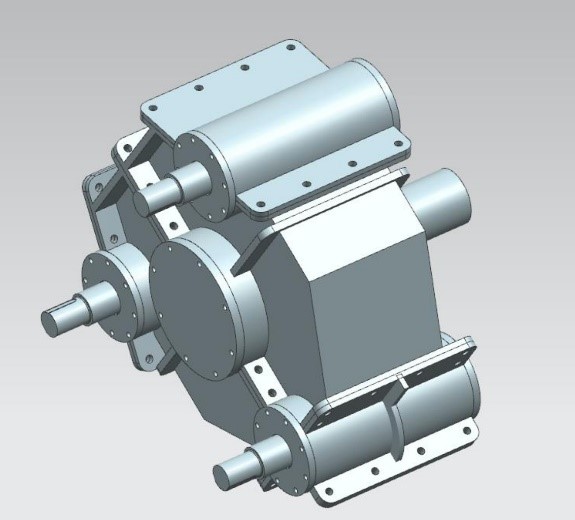
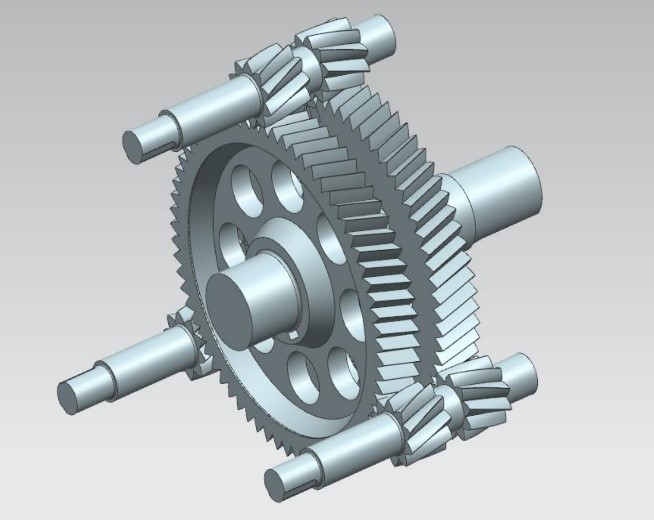
Figure 2. (LEFT) CAD representation of the case; (RIGHT) representation of the gears.
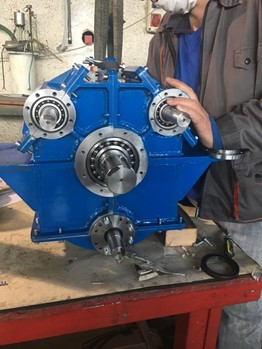
Figure 3. Final realization of the reducer for Naval hybrid application.
As part of this project, specialized support activities were also carried out, such as:
- The configuration of the hybrid-electric powertrain measurement system (based on National Instruments HW and LabView SW);
- Data testing and post-processing activities;
- Development of a mathematical model of the propulsion system in Matlab/Simulink Figure 4 and experimental validation;
- Development of control strategies for the hybrid propulsion system, based on the minimization theory of a potential Hemiltonian called “Equivalent Consumption and Minimization Strategy” (ECMS) this was then tested in the laboratory in Real Time (RT).
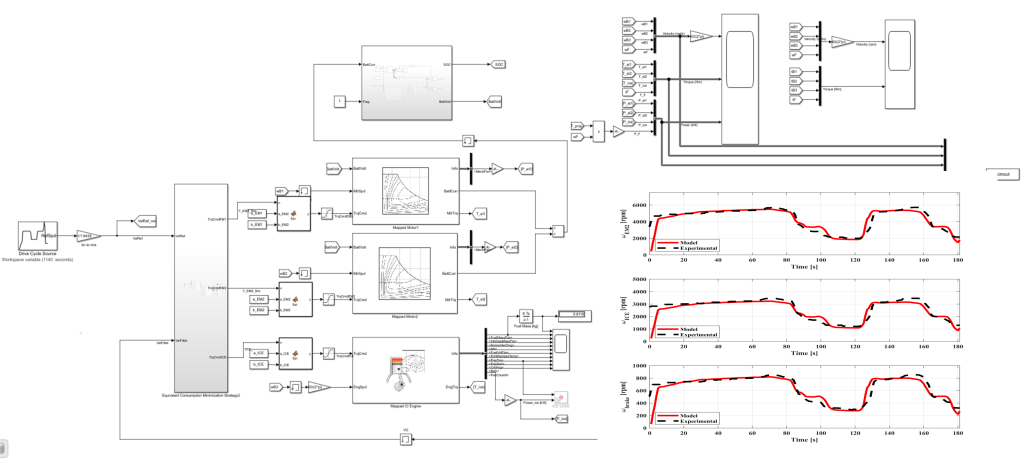
Figure 4. Mathematical model of the Naval hybrid thruster created in Matlab/Simulink.
Publications
- Marialto, R., Brando, G., Dannier, A., Sementa, P., Cardone, M., & Fornaro, E. (2023). Modeling and Experimental Validation of a Hybrid Electric Propulsion System for Naval Applications(No. 2023-24-0131). SAE Technical Paper.
- Tordela, C., & Fornaro, E. (2023). An MPC-Based Strategy for Managing Energy in Hybrid Powertrains of Fast Boats(No. 2023-24-0025). SAE Technical Paper.